₹12 Lakh Tax Cliff: Why a ₹1 Lakh Bonus Can Cost ₹78,000

Three friends get the same ₹1,00,000 Diwali bonus, all on the new tax regime. One pays ₹0 tax on it, one pays ₹31,200, and one pays ₹78,000. Nobody made a mistake. Here's the ₹12 lakh cliff behind it, the two things that soften it, and what to do with the bonus that actually reaches you.
Same ₹1 Lakh Bonus, Very Different Tax
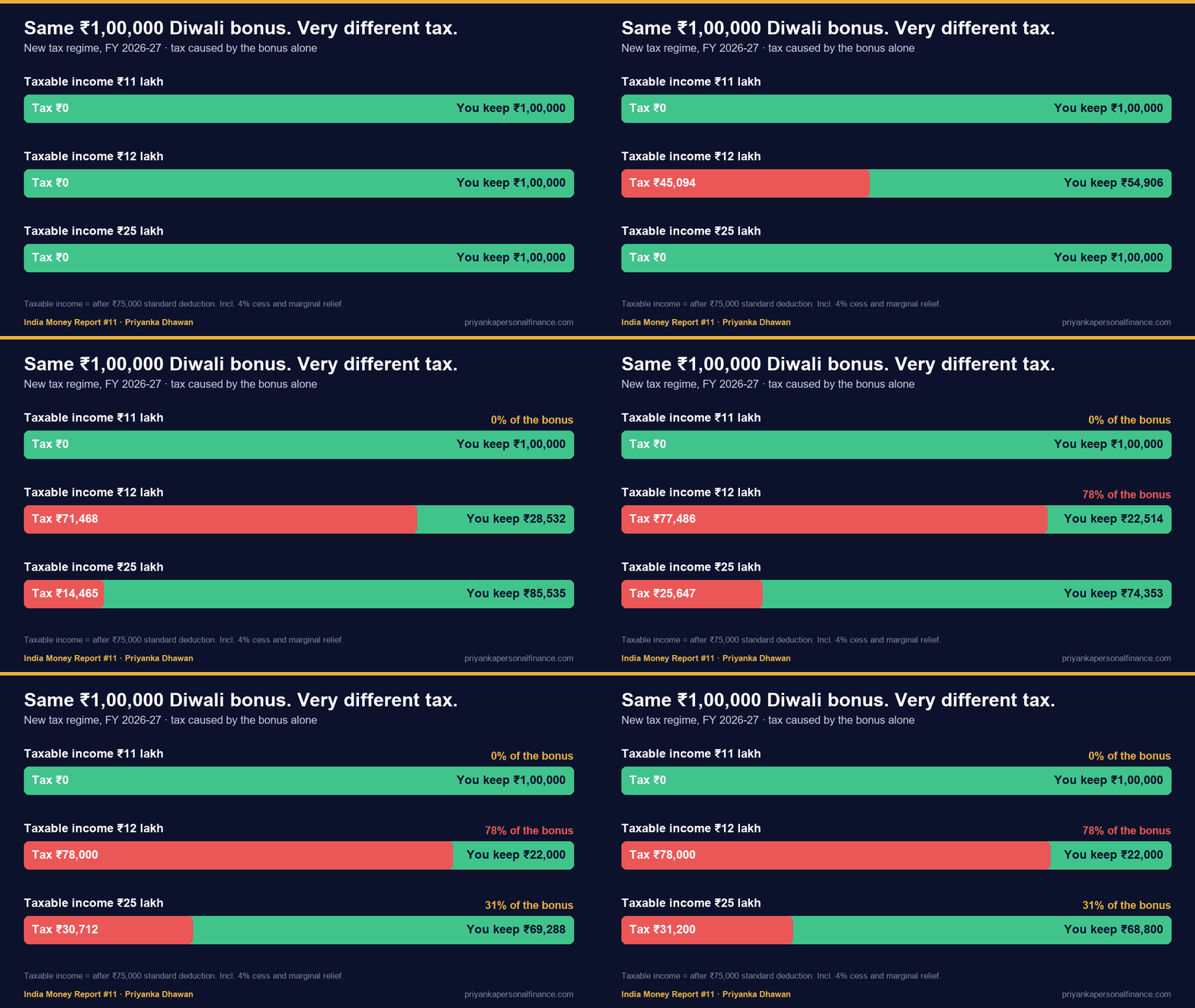
| Taxable income before bonus | After ₹1 lakh bonus | Extra tax caused by the bonus | Share of bonus lost to tax |
|---|---|---|---|
| ₹11,00,000 | ₹12,00,000 | ₹0 | 0% |
| ₹11,50,000 | ₹12,50,000 | ₹52,000 | 52% |
| ₹12,00,000 | ₹13,00,000 | ₹78,000 | 78% |
| ₹13,00,000 | ₹14,00,000 | ₹15,600 | 15.6% |
| ₹16,00,000 | ₹17,00,000 | ₹20,800 | 20.8% |
| ₹25,00,000 | ₹26,00,000 | ₹31,200 | 31.2% |
Look at the ₹13 lakh row: someone already above the cliff pays only ₹15,600 on the same bonus. The damage is concentrated on people sitting right at, or just below, ₹12 lakh of taxable income.
Why the Cliff Exists
New-regime slabs for FY 2026-27: 0–4L nil, 4–8L 5%, 8–12L 10%, 12–16L 15%, 16–20L 20%, 20–24L 25%, above 24L 30%, plus 4% health and education cess.
Tax on exactly ₹12 lakh by the slabs is ₹60,000, and the 87A rebate (up to ₹60,000) wipes it out. But the rebate is only available if taxable income is ₹12 lakh or less. At ₹13 lakh, there's no rebate at all, so tax is calculated on the whole ₹13 lakh:
- ₹4–8 lakh at 5% = ₹20,000
- ₹8–12 lakh at 10% = ₹40,000
- ₹12–13 lakh at 15% = ₹15,000
- Total ₹75,000 + 4% cess = ₹78,000
The rebate doesn't reduce gradually; it switches off. That's the cliff.
Marginal Relief: the Soft Edge (and Where It Ends)
To stop small raises from causing huge tax jumps, the law adds marginal relief: if your taxable income is above ₹12 lakh, your tax cannot be more than the income above ₹12 lakh.
- At ₹12,50,000: slab tax would be ₹67,500, but it's capped at ₹50,000 (the excess over ₹12 lakh). Add 4% cess: ₹52,000.
- The cap stops mattering at about ₹12,70,588, where the slab tax (₹60,000 + 15% of the excess) equals the excess itself. Above that, you pay normal slab tax.
Who Should Check This Now
- Salaried people earning roughly ₹11.75 lakh to ₹13.5 lakh a year (₹11–12.75 lakh taxable after the standard deduction), especially before a bonus, arrears or increment.
- Anyone whose employer has just paid a Diwali bonus: the TDS for the year gets recalculated, and the extra tax is usually deducted over the remaining months of the year, so take-home can drop sharply from November to March.
- People with side income (interest, freelance) that can push total taxable income over ₹12 lakh.
Two Things That Genuinely Help
- Employer NPS under Section 80CCD(2). In the new regime, your employer's NPS contribution is deductible up to 14% of basic + DA. If your company offers it as part of salary structuring, it can pull taxable income back under ₹12 lakh. This is an HR conversation, best had before the next bonus, not after.
- Run the numbers before the money lands. Use an old-vs-new calculator with your actual salary plus the expected bonus, so the TDS hit isn't a surprise.
Note what doesn't help in the new regime: 80C investments, health insurance under 80D, or home-loan interest on a self-occupied house. Those deductions belong to the old regime, where the 87A rebate stops at ₹5 lakh taxable income.
What to Do With the Bonus That Reached You: the 10-20-30-40 Split
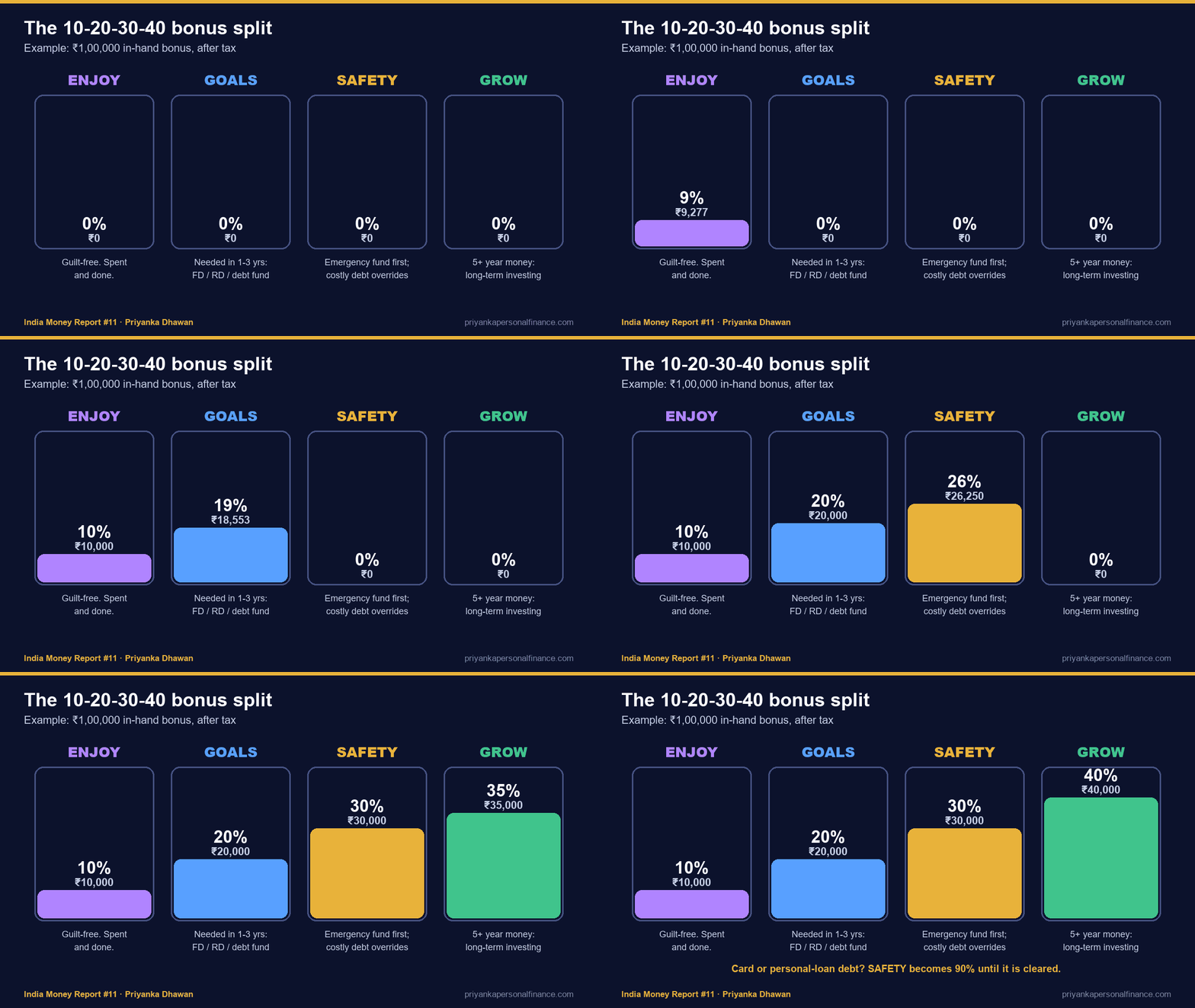
- 10% Enjoy: spend it guilt-free. A bonus with no joy in it makes the rest of the plan harder to stick to.
- 20% Goals: money you'll need in 1–3 years (a trip, a laptop, a car down payment). Keep it in an FD, RD or a debt fund so it doesn't fall in value right when you need it.
- 30% Safety: top up your emergency fund until it covers 6 months of expenses. Already there? Move this jar to Grow.
- 40% Grow: money you won't touch for 5+ years, for long-term investing.
One rule overrides the split: costly debt first
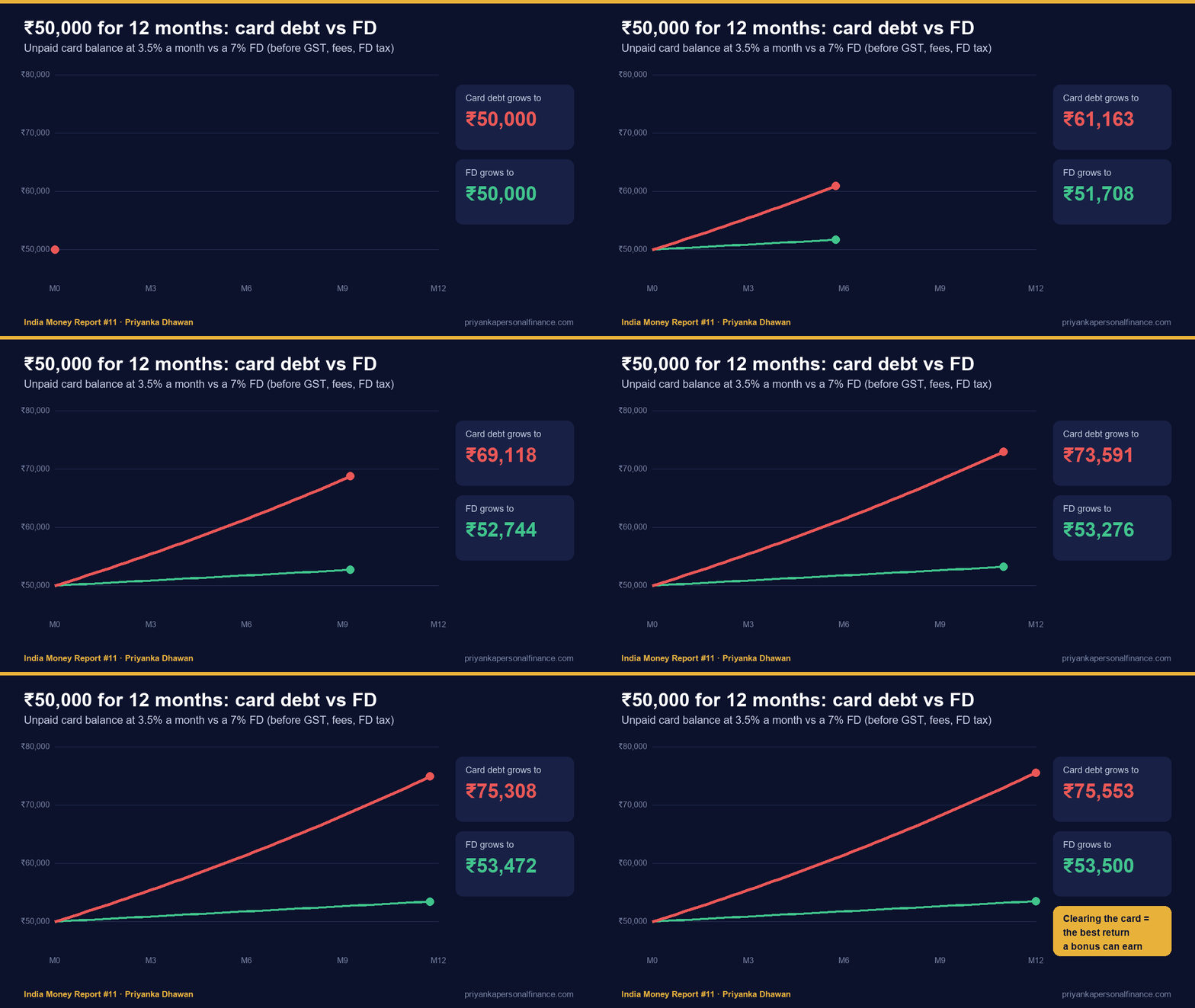
If you carry credit card or personal-loan debt, Safety becomes 90% and goes to the debt until it's cleared. At 3.5% a month, an unpaid ₹50,000 card balance grows to about ₹75,500 in a year (before GST on interest and late fees), while the same money in a 7% FD earns ₹3,500. Clearing the card is the best "return" a bonus can earn.
Why the 40% jar matters
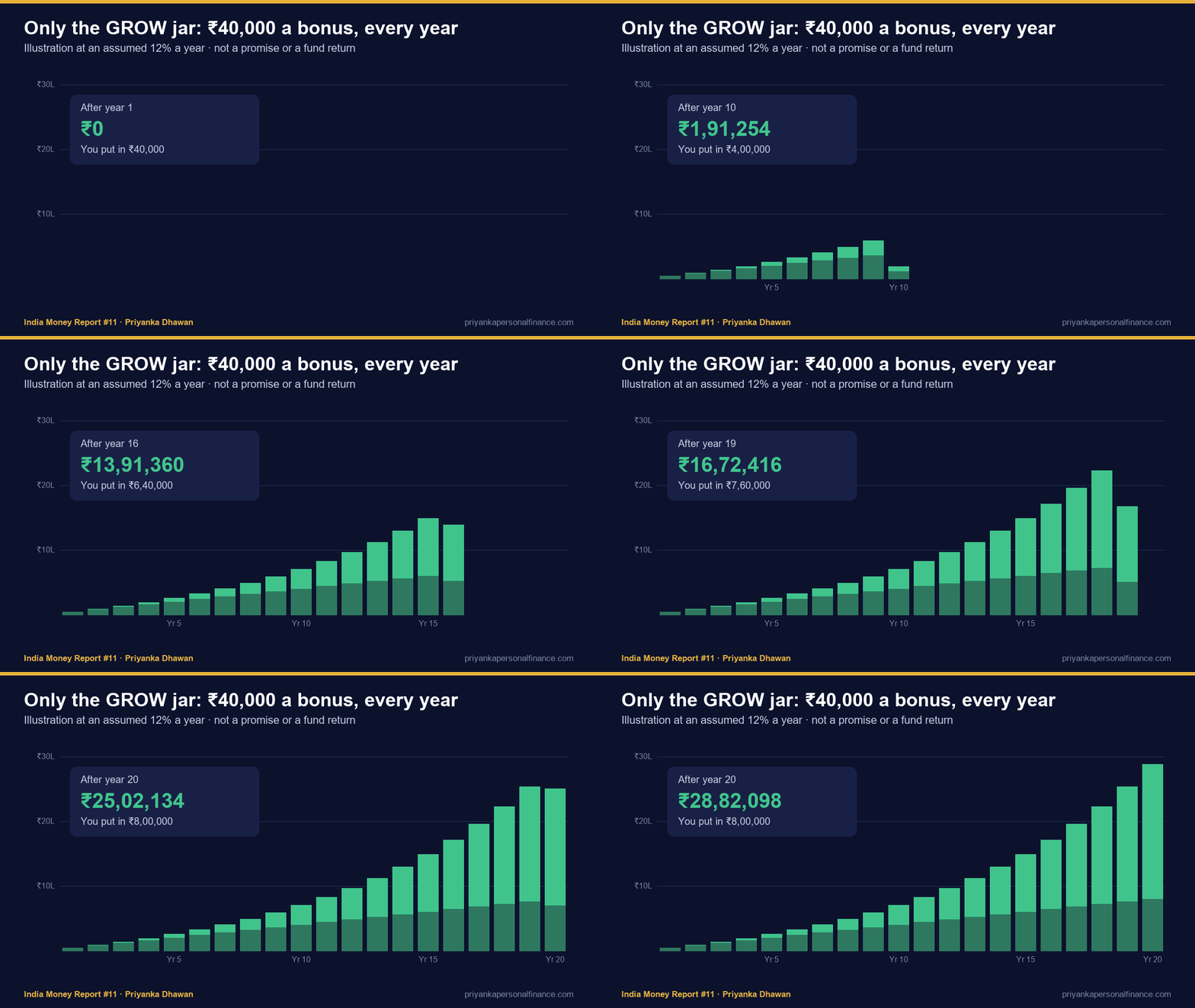
₹40,000 from every yearly bonus for 20 years is ₹8 lakh invested. At an assumed 12% a year it becomes about ₹28.8 lakh. That's an illustration, not a promise, but it shows why the bonus you never "felt" can become the biggest number in your plan.
Size your Safety jar with the emergency fund calculator, and play with the Grow jar in the SIP calculator.
FAQ
Is income up to ₹12 lakh tax-free in the new regime?
Yes. For FY 2026-27, if your taxable income is ₹12 lakh or less, the Section 87A rebate (up to ₹60,000) cancels your tax. For salaried people that means a salary of up to ₹12.75 lakh, because of the ₹75,000 standard deduction.
What is marginal relief under Section 87A?
If your taxable income is just above ₹12 lakh, your tax cannot be more than the amount by which your income exceeds ₹12 lakh. It stops helping at about ₹12.7 lakh of taxable income. The 4% cess is charged on top of the capped tax.
Why can a ₹1 lakh bonus cost ₹78,000 in tax?
If your taxable income was exactly ₹12 lakh, a ₹1 lakh bonus takes it to ₹13 lakh. The rebate no longer applies and tax is calculated on the full ₹13 lakh: ₹75,000 plus 4% cess = ₹78,000.
Does employer NPS contribution help?
Yes. In the new regime, your employer's NPS contribution under Section 80CCD(2) is deductible up to 14% of basic + DA. If your employer offers it, it can bring your taxable income back under ₹12 lakh.
Does the ₹12 lakh rule apply in the old regime?
No. In the old regime the 87A rebate only applies up to ₹5 lakh of taxable income (maximum ₹12,500). The ₹12 lakh zero-tax limit is only in the new regime.